How to Choose the Best Raw Unrefined Shea Butter: 7 Checks Before You Buy
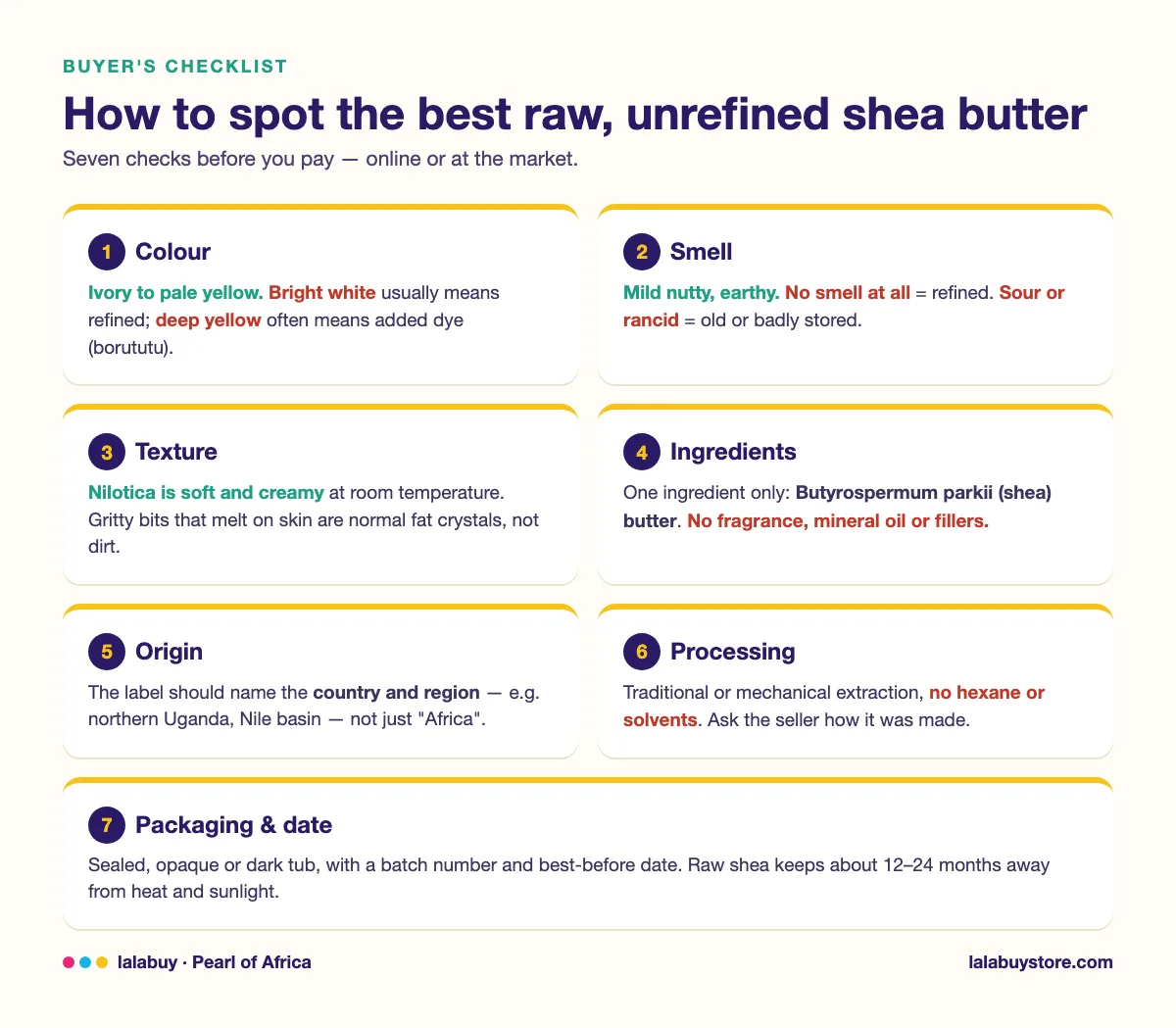
"100% raw unrefined shea butter" is printed on almost every tub, from the market stall to the supermarket shelf. Some of it is excellent. Some of it has been refined, bleached, mixed with cheaper fats or dyed yellow. The good news is that you can tell the difference with your eyes, your nose and the label — no lab needed.
Raw, unrefined, refined: what the words mean
- Raw / unrefined (often called Grade A): extracted from the nuts and filtered, nothing removed and nothing added. It keeps its natural colour, scent and the unsaponifiable compounds that make shea such a good moisturiser.
- Refined (Grade C or below): processed with heat, filtering, deodorising and sometimes solvents such as hexane. It is white, odourless and very consistent — useful for some factory recipes, but it has lost much of what makes raw shea special.
- Whipped: raw shea butter beaten with air so it is lighter and fluffier. Whipping changes the texture, not the quality — as long as nothing else is mixed in.
7 checks for the best raw shea butter
1. Colour
Raw shea butter is ivory, cream or pale yellow. Bright snow-white usually means it has been refined. A deep, egg-yolk yellow is often a sign of added colouring — traditionally the root of the borututu plant — used to make butter look "richer".
2. Smell
Raw shea has a mild, nutty, slightly earthy smell. No smell at all usually means refined. A sour, sharp or rancid smell means old butter or poor storage — don't buy it. East African Nilotica shea is naturally milder-smelling than West African shea, so a gentle scent is normal (see the comparison).
3. Texture
At Kampala room temperature, Nilotica shea is soft and scoopable; West African shea is firmer. Small grains are normal — they are fat crystals that melt as soon as they touch warm skin.
4. Ingredients
The ingredient list should have one item: Butyrospermum parkii (shea) butter. Fragrance, mineral oil, petroleum jelly, "vegetable oil" or preservatives mean it is a blend, not pure shea. Some popular "best shea butter" products online are actually shea mixed with almond or other oils — read the back of the tub, not just the front.
5. Origin
Good sellers tell you where the shea comes from — the country, and ideally the region. "Product of Africa" tells you nothing. Shea from northern Uganda is Nilotica; shea from Ghana, Burkina Faso or Nigeria is West African.
6. Processing
Ask how it was extracted. Traditional processing (roasting, grinding and kneading with water) and mechanical pressing are both fine. Avoid solvent-extracted butter. Specialist sellers can usually explain their process; a seller who can't answer is a warning sign (why the label alone isn't proof).
7. Packaging and date
Light and heat break down raw shea. Look for a sealed, clean tub or jar, a batch number and a best-before date. Stored cool and out of the sun, raw shea keeps roughly 12–24 months.
Quick test at home
Rub a pea-sized amount between your fingers. Raw Nilotica shea should melt within seconds and sink into the skin, leaving it soft rather than shiny. If it stays waxy, smells of nothing and leaves a white film, you probably have refined or blended butter.
The shea butter we sell
Pearl Nilotica Whipped Shea Butter passes every check on this list: one ingredient, raw Nilotica shea from northern Uganda's Nile basin, whipped for a light texture, in a sealed jar. Order online or on WhatsApp +256 700 807 217 for same-day delivery in Kampala.
Next, learn how to use shea butter for your face, body, hair and baby.
Frequently asked questions
Is yellow shea butter better than white? Not by colour alone. Natural raw shea ranges from ivory to pale yellow. Very bright yellow is usually dyed; very white is usually refined.
Does raw shea butter go bad? Yes, eventually. If it smells sour or sharp, it has gone rancid. Keep the lid closed and store it away from heat and sunlight.
Is organic shea butter better? Shea trees grow wild and are rarely sprayed, so most raw shea is grown without chemicals whether or not it carries an organic certificate. Processing and freshness matter more.