Shea Butter Uses: How to Use Nilotica Shea Butter for Face, Body, Hair and Baby
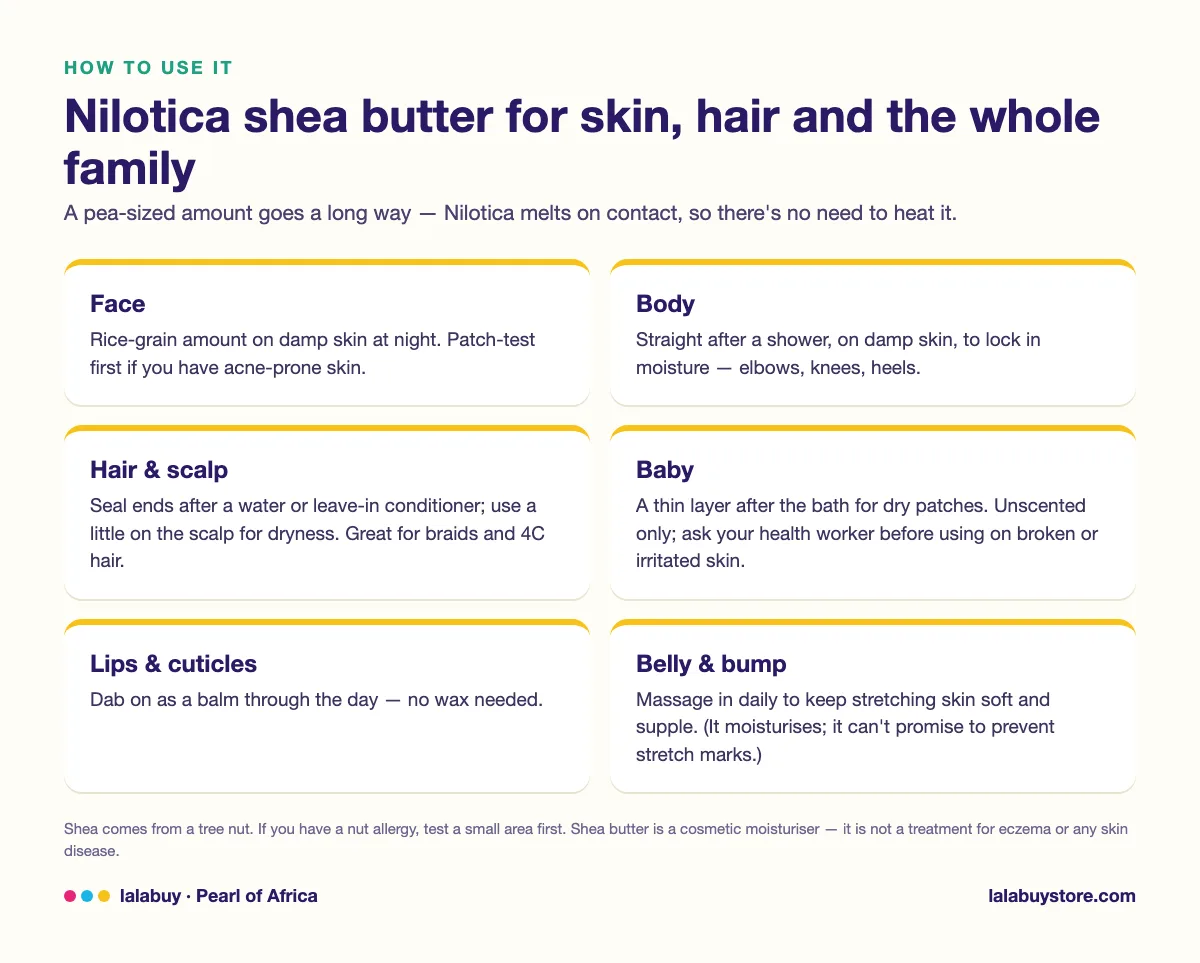
Raw shea butter is one of the few products in your bathroom you can use from head to toe — on your face, your hair, your lips, your heels and your baby. Here is how to get the most from it, especially if you are using soft East African Nilotica shea.
A note before we start: shea butter is a moisturiser. It softens and protects dry skin and hair. It is not a medicine, and it does not treat eczema, acne or any other skin condition. If you have a skin problem, see a health worker.
Why Nilotica is easier to use
Nilotica shea from northern Uganda is high in oleic acid, so it stays soft at room temperature and melts the moment it touches skin (why that matters). You can scoop it straight from the jar — no microwave, no melting pot — and you need less of it than you think.
Shea butter for your face
- Use an amount the size of a grain of rice.
- Apply at night on slightly damp skin after washing — damp skin helps it spread thinly.
- Pat it in rather than rubbing hard.
Shea is rich. If your skin is oily or breaks out easily, try it on one small area for a few nights first, or use it only on dry patches.
Shea butter for your body and dry skin
The best time is straight after a bath or shower, while your skin is still damp. Shea seals that water in. Focus on elbows, knees, heels and shins, which dry out fastest in Uganda's sun and dust. For cracked heels, apply a thicker layer at night and wear socks.
Shea butter for hair and scalp
Shea butter is a favourite for natural and 4C hair because it seals in moisture.
- LOC / LCO method: apply water or a leave-in conditioner first, then a light oil, then a small amount of shea to seal (or swap the order of oil and cream to suit your hair).
- Ends: smooth a little over the ends to reduce dryness and breakage.
- Braids and twists: a fingertip of Nilotica on the scalp between braids helps with dry, itchy scalp.
- Less is more: too much shea can weigh hair down. Start with a pea-sized amount.
Shea butter for babies
Many Ugandan families have used shea on babies for generations. A thin layer after the bath keeps a baby's skin soft and helps with dry patches.
- Choose raw, unscented shea with nothing added.
- Keep it away from the eyes and mouth.
- Do a small patch test first.
- If your baby has broken, weeping or very red skin, ask your health worker before applying anything.
Shea butter for the pregnancy belly
As your bump grows, the skin stretches and can feel tight and itchy. Massaging shea into the belly, hips and breasts every day keeps that skin soft and supple and eases the itch. Be cautious with promises online: no cream has been proven to prevent stretch marks, which depend largely on genetics. Shea will keep your skin comfortable — that is the honest benefit.
Lips, cuticles and more
- Lips: dab on as a natural lip balm, especially in the dry season.
- Cuticles and nails: rub a little in at night.
- After shaving: a thin layer soothes the dry, tight feeling.
Safety tips
- Shea comes from a tree nut. If you have a nut allergy, test a small area first.
- Use only raw, unscented shea on sensitive skin — added fragrance is the most common cause of irritation.
- Store it in a cool place with the lid closed.
Get Nilotica shea butter in Uganda
Pearl Nilotica Whipped Shea Butter is raw Nilotica shea from northern Uganda, whipped so it spreads even more easily, with nothing added. Order online or on WhatsApp +256 700 807 217 — same-day delivery in Kampala when you order before 2 PM.
Not sure your current tub is the real thing? Read how to choose the best raw unrefined shea butter.